
Search Utah Property Records
Utah property records are public documents maintained by the elected County Recorder in each of the state's 29 counties. These records include deeds, mortgages, trust deeds, liens, plats, and other instruments that affect real property. Anyone can search Utah property records at the county recorder's office, through online county portals, or by submitting a request under the Government Records Access and Management Act. This guide covers where to find property records across Utah, which state agencies hold related documents, and how state law governs public access to real estate information.
Utah Property Records Quick Facts
How Utah Property Records Work
Each of Utah's 29 counties has an elected County Recorder. This office is the official keeper of real property records for that county. The Recorder's duties are set by state law, primarily Utah Code Title 17, Chapter 21. The office records, indexes, and stores all documents that affect real estate in the county. That includes warranty deeds, quitclaim deeds, trust deeds, mortgages, liens, easements, subdivision plats, survey maps, and mining claims. All of these documents become part of the public record once filed.
Utah uses a race-notice recording system under Utah Code Title 57. Under this system, a recorded document gives constructive notice to all future buyers and lenders. A buyer who purchases in good faith and records first generally wins over a prior unrecorded claim. This is why recording matters so much in Utah real estate. An unrecorded deed provides no protection against a later buyer who records before you. Recording also establishes the chain of title that shows how ownership of a property has passed from one party to the next over time.
County recorders are elected, not appointed. They serve four-year terms and report to the voters rather than to county commissioners. This structure is designed to keep the records office independent and accessible to the public. Staff at each office can help you search records, but they cannot give legal advice or prepare documents for you.
The Utah Office of the State Auditor publishes a statewide Property Values Tool that shows how much each county assessor has valued property across all 29 counties. You can look up a specific parcel by address or parcel number and see year-over-year valuation changes displayed on an interactive map. Most counties contribute data to this tool, which adds a layer of transparency to how property is assessed for tax purposes in Utah.
Utah Property Tax Division and County Assessors
The Utah State Tax Commission oversees the Property Tax Division, which administers property tax laws and rules throughout the state. This division operates under Utah Code Title 59, Chapter 2, sometimes called the Property Tax Act. The Commission establishes valuation methods, holds tax appeal hearings, and reviews county assessment practices to confirm they meet the equal and uniform treatment standard required by Utah Constitution Article XIII, Section 2. Commission Rule R884 sets out detailed property tax administration procedures.
County assessors are responsible for determining the market value of all taxable real property in their county as of January 1 each year. They maintain property characteristic records, tax maps, and assessment rolls. Property owners who disagree with an assessment can appeal to the County Board of Equalization. If still unsatisfied, a second appeal goes to the State Tax Commission. Tax records held by assessors and treasurers supplement the deeds and instruments kept by county recorders and can help verify ownership and tax status for a given parcel in Utah.
The Utah State Tax Commission Property Tax Division sets statewide standards for how county assessors value real property and handles formal tax appeals from Utah property owners.
Property owners who want to challenge their assessed value can find appeal forms, deadlines, and procedures on the Tax Commission website.
Note: County assessor records show assessed value for tax purposes, which may differ from the sale price or appraised value shown in deed records at the County Recorder's office.
Utah Property Recording Statutes
Utah Code Title 57 is the primary body of law governing real estate recording in the state. Under Utah Code § 57-3-101, documents affecting real property must be recorded with the county recorder to provide constructive notice to the public. Once filed, § 57-3-102 states that a recorded document "shall, from the time of recording with the appropriate county recorder, impart notice to all persons of their contents." This makes the county recorder's records the authoritative source of notice for all real property in Utah.
Section 57-3-103 sets out the race-notice priority rules. Under this provision, an unrecorded document is void against a subsequent purchaser who bought in good faith for value and recorded first. This is what makes recording so critical. Section 57-3-105 requires that recorded documents contain a legal description sufficient to identify the property. Section 57-1-26 covers the notice of default and sale requirements that apply when a trust deed goes into foreclosure. These statutes collectively govern the chain of title and the public notice system for all real estate in Utah's 29 counties.
Utah Code Title 57 contains the full text of Utah's real estate recording statutes, including deed requirements, priority rules, and legal description standards.
Title 57 covers everything from basic conveyancing requirements to trust deed foreclosure procedures and applies to every county in the state.
Public Access to Property Records Under GRAMA
Utah's Government Records Access and Management Act, known as GRAMA, is the state's public records law. It is codified at Utah Code § 63G-2. Under § 63G-2-201(1), "every person has the right to inspect a public record free of charge." This right extends to property records held by county recorders, county assessors, and county treasurers. You do not need to state a reason for your request. Anyone can ask to view property records in Utah.
State agencies and county offices must respond to GRAMA requests within 10 business days. For expedited requests or requests from the media, the response window drops to five days. Fees may be charged for copies, but the first 15 minutes of staff research time must be provided at no charge under § 63G-2-203. Property records are presumptively public under GRAMA, with limited exceptions for certain personal identifying information such as Social Security numbers. If a records request is denied, GRAMA provides an appeal process through the State Records Committee.
In practice, most Utah county recorders make property records searchable online for free. But GRAMA is the legal backbone behind that access. It ensures that public access to property records in Utah is a right, not a privilege.
Historical Utah Property Records
The Utah Division of Archives and Records Service holds historical property records for all 29 counties. Some of these records date to the 1850s, when Utah was still a federal territory. The collection includes county recorder deed books, probate court land claim records, mining claims, and early property transactions from across the state. A large portion of this material has been digitized and is available through the Archives website at no charge.
The Archives maintains several research guides specifically for property history work. These include the "Guide to Original Land Titles in Utah Territory," the "Guide to Researching Property History," and the "Guide to Mining Claims." Federal land patents, state land grants, and historical plat maps are all part of the collection. For genealogists or researchers trying to trace ownership of a piece of land back through multiple generations, the Archives is often where that research begins. Early deed books are kept here when the county no longer holds physical custody.
The Utah Division of Archives and Records Service preserves historical property records from all 29 Utah counties, including deed books and land claim records from the 1850s.
Researchers can contact the Archives directly for help locating specific county records, especially those that predate electronic recording systems in Utah.
Federal Land Records and BLM Utah
Before Utah became a state in 1896, the federal government owned most of the land. The Bureau of Land Management Utah State Office holds records that document how that land was originally transferred from the federal government into private hands. The General Land Office Records database provides online access to land patents from 1820 to the present. The BLM Utah office at 324 South State Street in Salt Lake City holds copies of patents and tract books from 1869 forward, along with survey plats and field notes dating to the 1850s.
Township plats showing original land purchasers are available from BLM Utah. These records are essential for understanding the origin of property rights in the state. Every chain of title in Utah eventually traces back to a federal land patent or a state land grant. BLM records also include mineral land records and survey plats that document the physical boundaries of original federal grants.
The Bureau of Land Management Utah State Office maintains federal land patents, tract books, and survey plats that form the foundation of property ownership history across Utah.
The BLM's General Land Office Records system is searchable online by name, state, or geographic area and covers Utah land patents back to the earliest federal survey period.
Mineral Rights and Mining Records
The Utah Division of Oil, Gas and Mining maintains records of mineral rights and mining claims across the state. Mining claims are recorded with county recorders, but the Division holds additional regulatory records that county offices do not keep. These include mining claim location notices, proof of labor filings, mineral lease agreements, coal mining permits, oil and gas well records, and abandoned mine files.
Mineral rights in Utah are sometimes severed from surface rights. A piece of land may have been sold with the surface rights retained in one set of hands while the mineral rights were conveyed separately to a mining or energy company. This means a full property search in Utah sometimes requires checking both county recorder records and the Division's database. If the property is in an area with a history of mining or oil and gas production, mineral rights research is especially important.
The Utah Division of Oil, Gas and Mining maintains regulatory records for mining claims, mineral leases, and oil and gas wells across the state.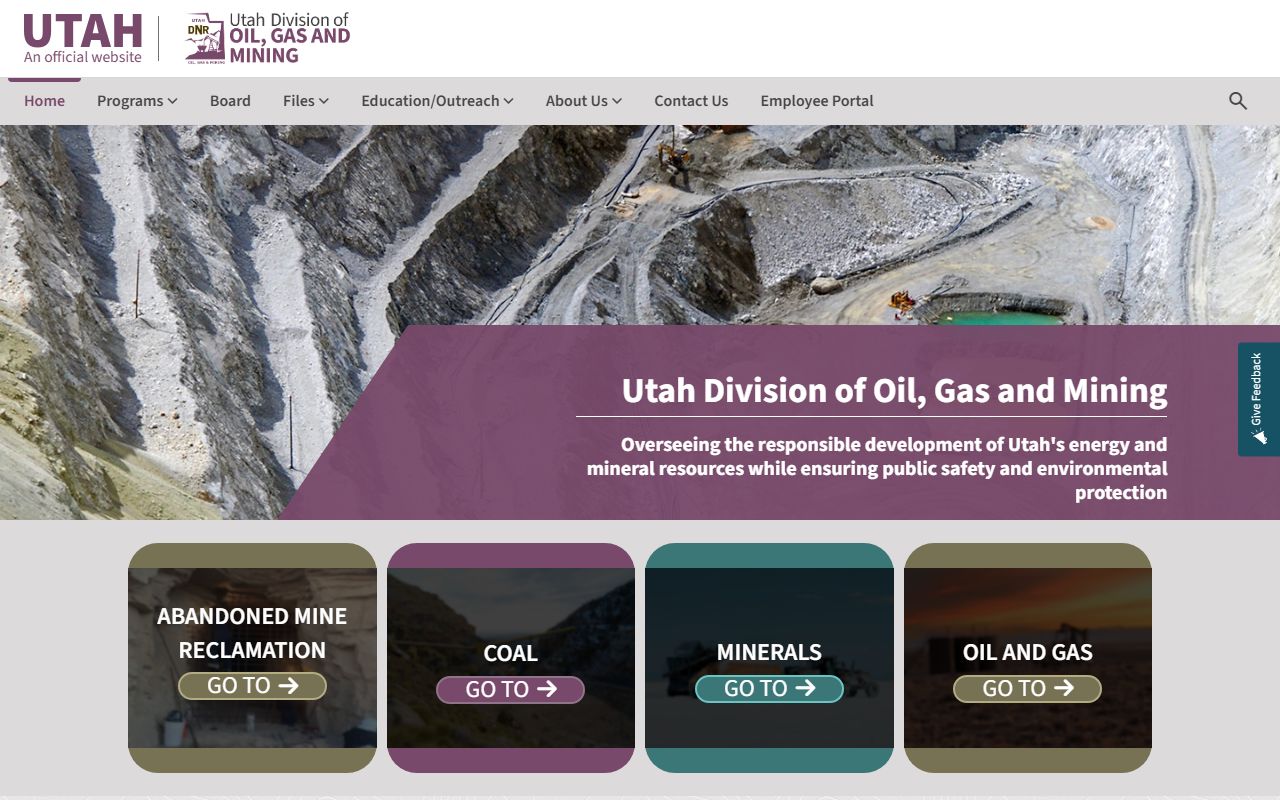
Note: Researching mineral rights in Utah requires checking both county recorder records for recorded mining claims and Division of Oil, Gas and Mining records for regulatory filings.
Historic Property Records in Utah
The Utah State Historic Preservation Office maintains records of properties that carry a historic designation across the state. Its holdings include National Register of Historic Places nominations, historic building surveys, and archaeological site records. A listing on the National Register can affect what a property owner can do with their land and may open the door to state and federal historic tax credit programs.
SHPO works with local governments to maintain historic property inventories. The office provides research assistance for people who need to know if a property has a historic designation or has been nominated for one. If you are researching an older property in a historic downtown area of Utah, SHPO records can reveal a layer of property history that does not appear in county recorder deed files.
The Utah State Historic Preservation Office maintains records of historic designations, National Register nominations, and archaeological site files for properties across Utah.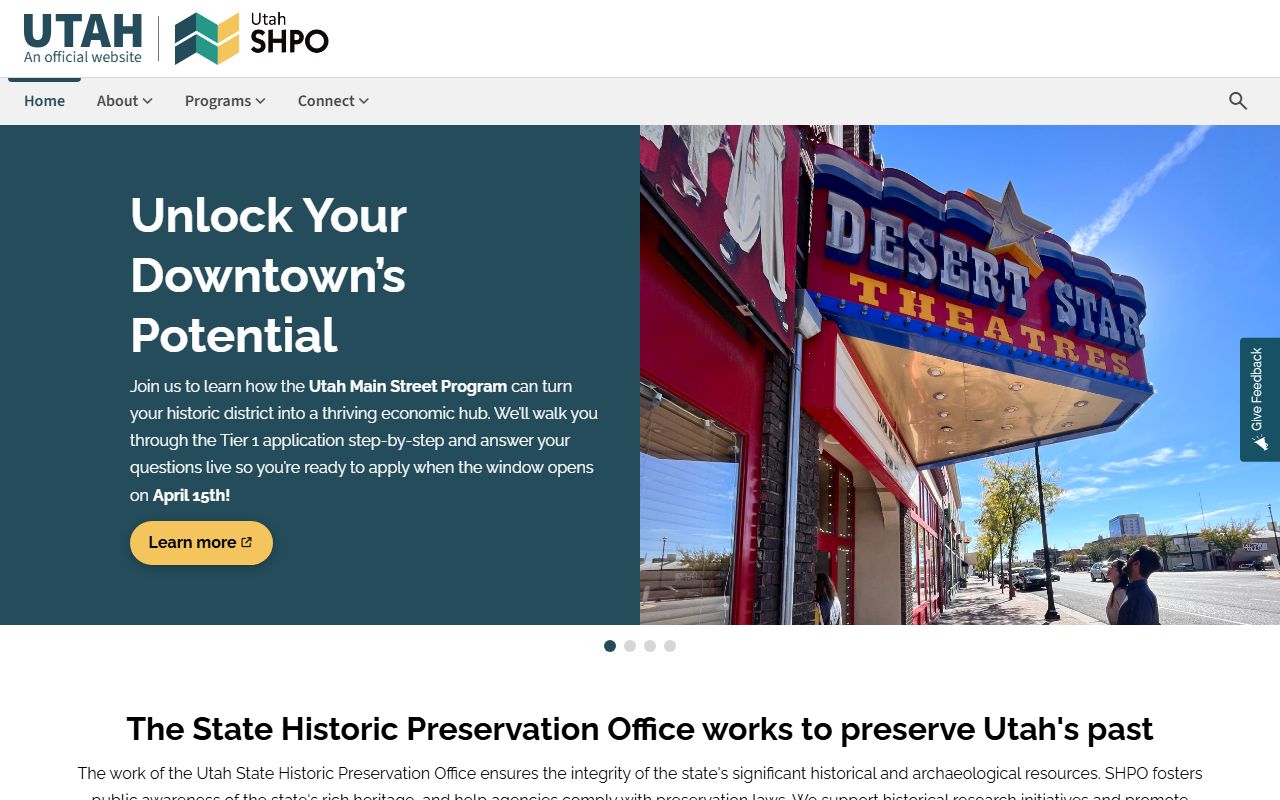
Historic designations are separate from county recorder records but are an important part of a complete property history in Utah.
State Oversight of Property Records
The Utah State Auditor conducts audits of county property assessment and collection practices. The office investigates complaints about unequal property valuation and publishes reports on how well counties follow constitutional requirements for uniform taxation. The Property Values Tool described above is one product of this oversight work. The Auditor's reports are public and available on the office website.
The Utah State Auditor publishes compliance audits and local government reports covering county property assessment practices across Utah.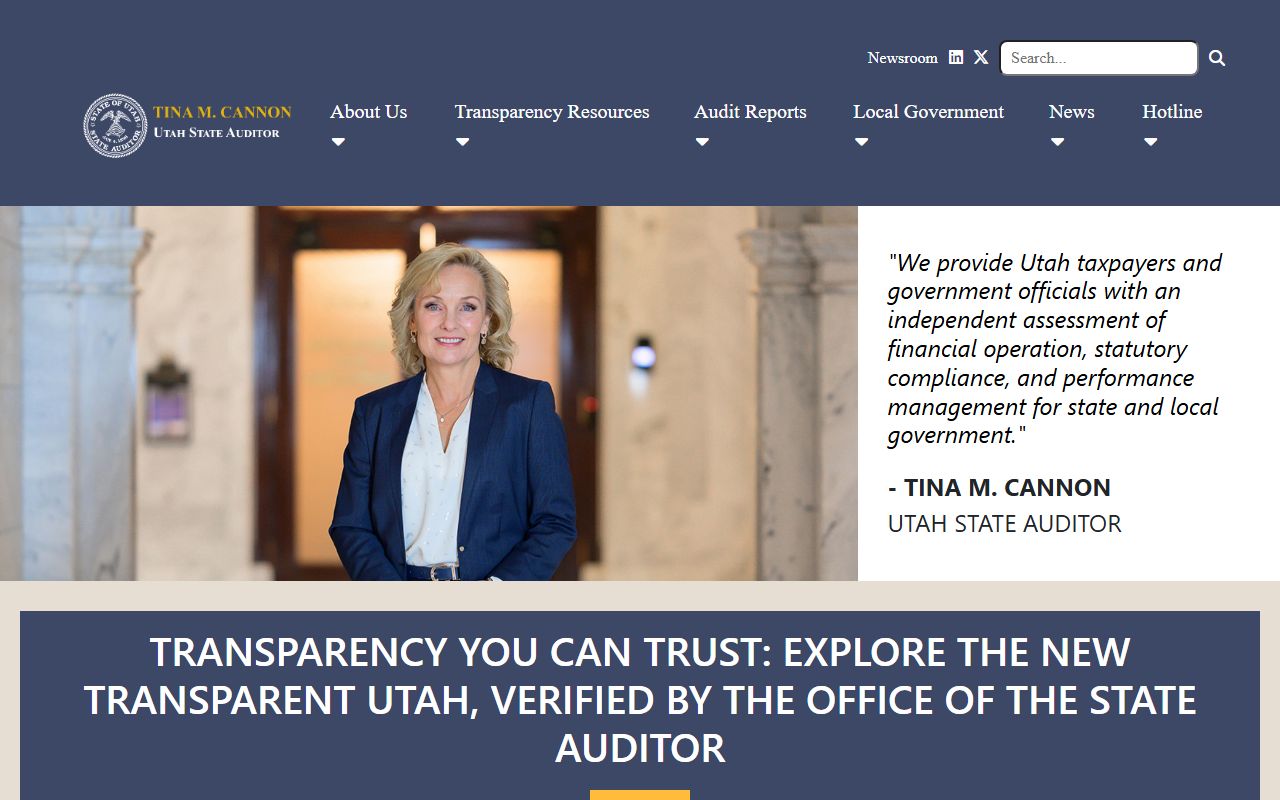
Audit reports from the State Auditor's office can surface issues with how a county has managed its property records or assessment practices.
The Utah State Legislature enacts all property tax and recording statutes. Recent legislation has addressed electronic recording standards, online public access to county records, and privacy protections for personal information that appears in recorded documents. The Legislature's website has the full text of every Utah Code provision related to property records, plus the legislative history of past amendments. If you want to understand how a recording rule came to be or what a statute actually says, the Legislature's website is the right place to start.
The Utah State Legislature website provides the complete text of all state statutes governing property recording, property tax, and public access to records in Utah.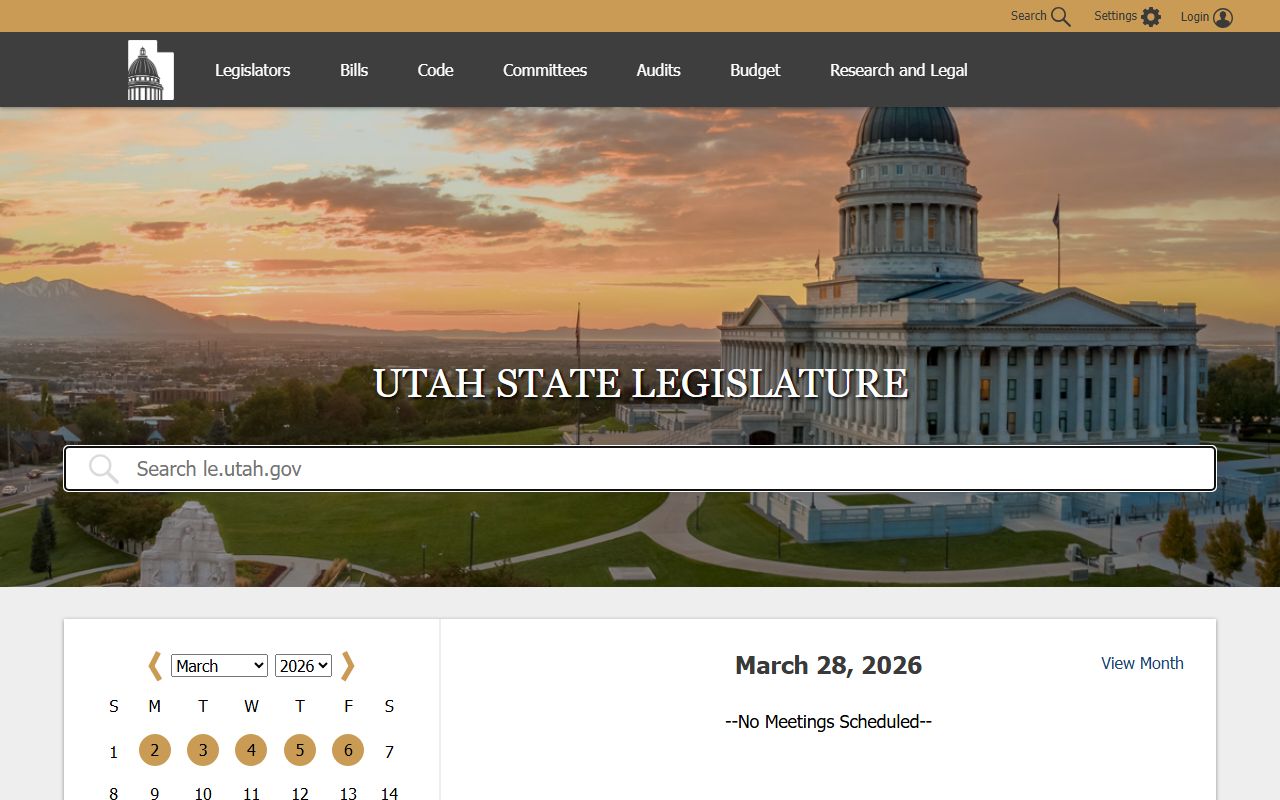
The Legislature's online code is fully searchable and free to use, making it a practical starting point for anyone who needs to read the actual law behind Utah property records.
Utah GIS and Statewide Parcel Data
The Utah Geospatial Resource Center maintains the State Parcel Dataset, which pulls parcel boundary data from all 29 counties into one statewide layer. This resource provides standardized parcel geometries and basic property information for the entire state. The dataset is available for free download and supports property research through spatial analysis and mapping. Most counties contribute data to this statewide resource, though update schedules vary by county.
The parcel dataset is a practical tool for viewing property boundaries, checking lot dimensions, and confirming parcel numbers before visiting a county recorder's office. Many counties also maintain their own GIS portals with more detailed local data tied directly to their recorder and assessor systems. The statewide dataset fills the gap for researchers who need a single source covering all of Utah.
The Utah Geospatial Resource Center provides free access to the statewide parcel dataset and other geographic data resources covering all 29 Utah counties.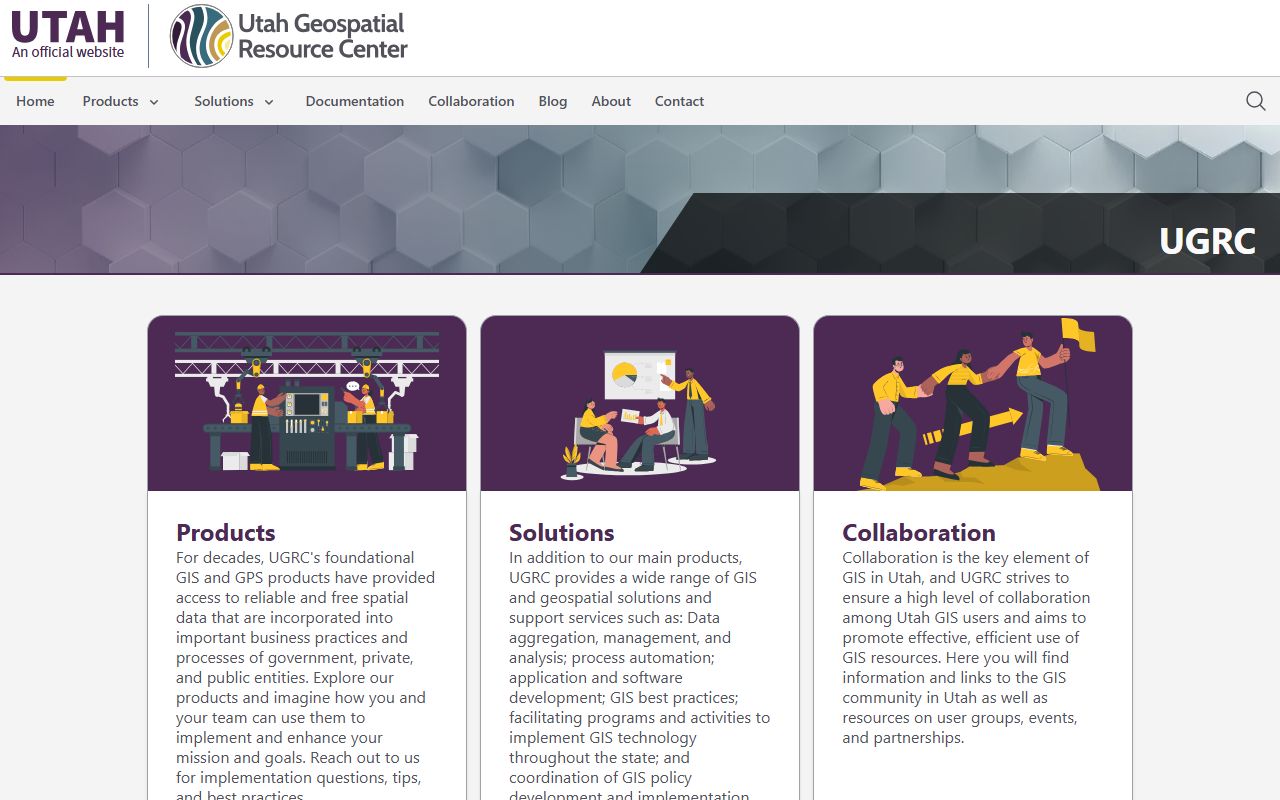
The parcel dataset is updated as counties contribute new data and is one of the most useful free resources for statewide property boundary research in Utah.
More Utah Property Record Resources
The Utah Division of Real Estate regulates real estate licensees in the state, including agents, brokers, and appraisers. While the Division does not maintain deed records, it is a key part of the Utah real estate system. You can verify the license status of any real estate professional in Utah through the Division's online lookup tool. This is useful when working with a third party to research or buy property in the state.
The Utah Division of Real Estate provides license verification tools and regulatory resources for real estate professionals and consumers in Utah.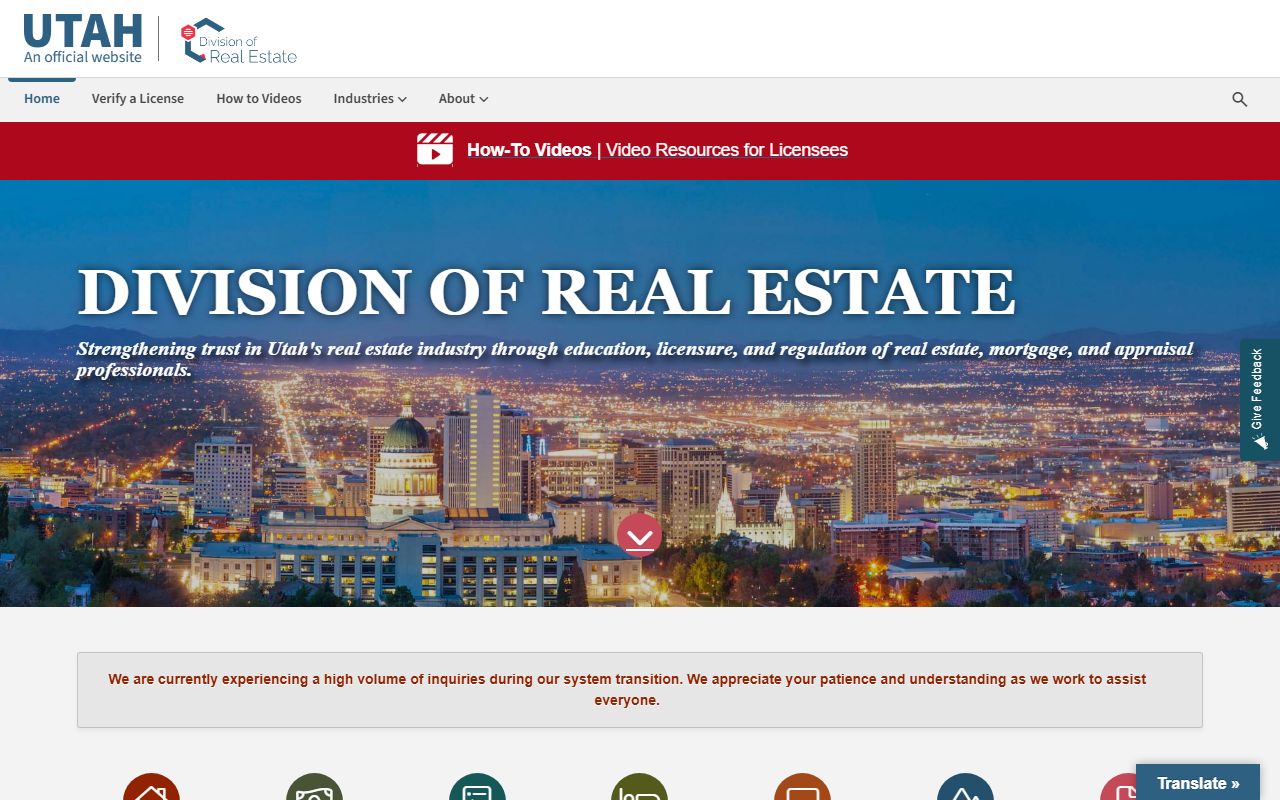
Buyers and sellers can check whether a real estate agent or broker is currently licensed and in good standing in Utah through the Division's public license search.
The Utah State Government Portal links to every state agency, including those that manage property-related records. It is a useful starting point when you are not sure which agency holds the information you need. For GIS and workforce data tied to land use, Utah Department of Workforce Services also provides geographic data tools that supplement county-level property research.
The Utah State Government Portal serves as the central hub for all state agency websites, including those involved in property records, land management, and tax administration.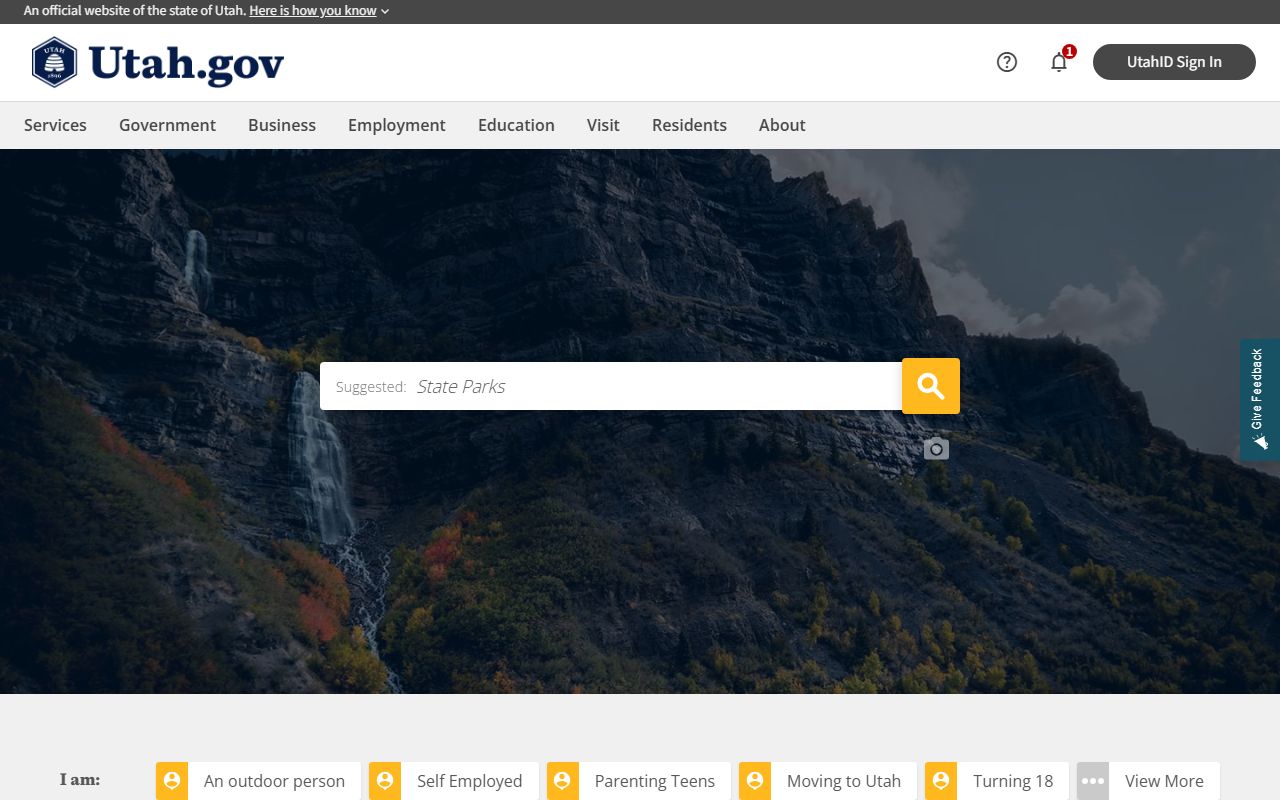 The Utah Department of Workforce Services maintains GIS and labor market data that can help researchers understand land use and development patterns across the state.

Both the State Portal and Workforce Services site link out to county-level resources that are useful when doing property research beyond basic deed searches in Utah.
Browse Utah Property Records by County
Property records in Utah are kept at the county level by the elected County Recorder. Each of the 29 counties has its own office with local contact information, search tools, and fee schedules. Select a county below to find specific resources for property records in that area.
Utah Property Records by City
Cities in Utah do not maintain their own deed records. Property records for any city address are kept by the county recorder for that county. Select a city below to find the county recorder, assessor, and city-level resources for that area.