
Iron County Property Records
Iron County property records are kept by the County Recorder in Parowan and cover the full range of land documents filed in the county. Deeds, mortgages, liens, plats, and maps are all part of this public record system. If you need to search ownership history, confirm a lien, or review a recorded document for land in Iron County, this page walks you through the offices and online tools available to you.
Iron County Quick Facts
Iron County Recorder's Office
The Iron County Recorder is the primary office for real estate documents in the county. The Recorder organizes, stores, and retrieves land records so that anyone can look up ownership, encumbrances, and other interests tied to a parcel. This office handles deeds, mortgages, maps, liens, plats, and other property ownership records. You can get copies in person or by mail.
The office is located in Parowan at 68 S 100 E. The mailing address is P.O. Box 506, Parowan, UT 84761. You can call the Recorder at (435) 477-8350 to ask about records or confirm what you need to bring before you visit. Staff can help you find a document once it has been recorded. They do not prepare legal documents or give legal advice, so bring the information you already have.
The Iron County Recorder page on the county website has contact details and information about the recording process. The main Iron County government portal also lists all county offices and their services.
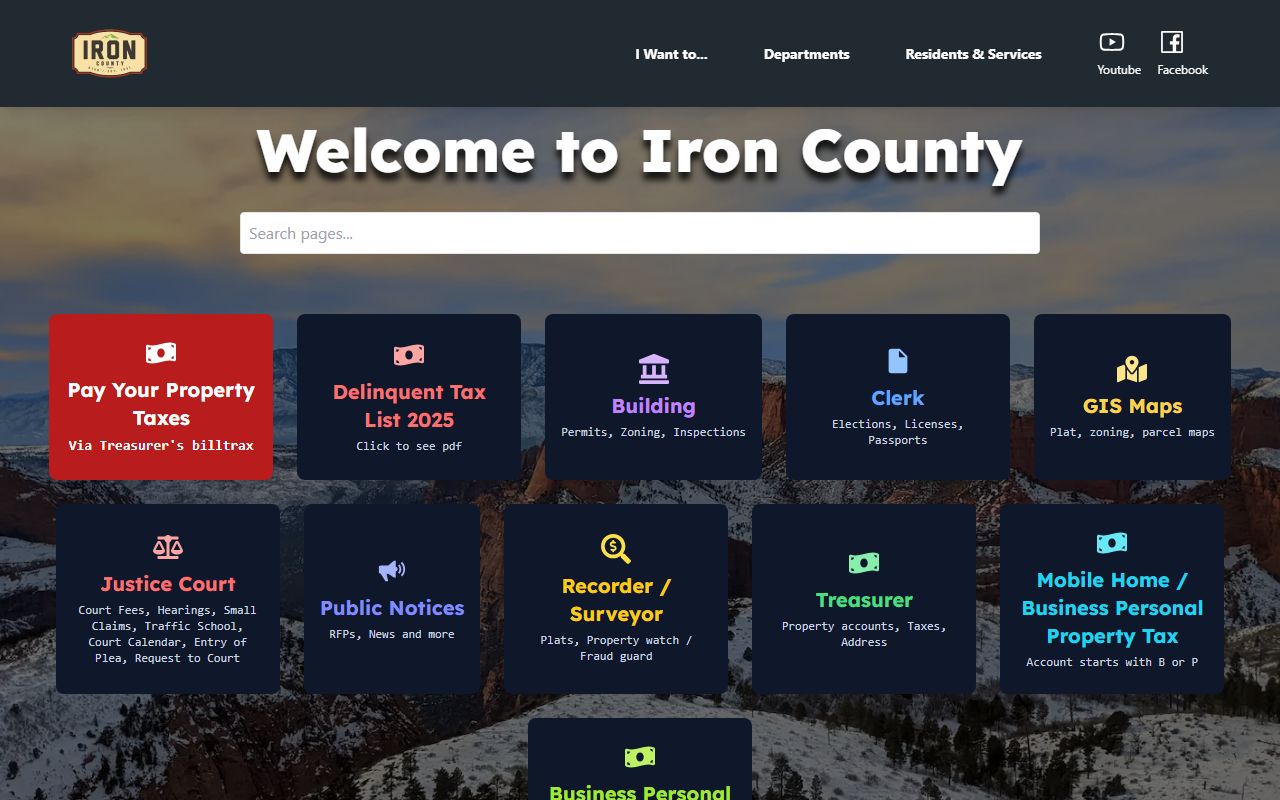
The Iron County government portal is a good starting point if you need to find the right office for a specific type of record. From there you can navigate to the Recorder, Assessor, and other departments that keep land-related data.
| Office |
Iron County Recorder 68 S 100 E (P.O. Box 506) Parowan, UT 84761 Phone: (435) 477-8350 |
|---|---|
| Services | Record and retrieve deeds, mortgages, liens, plats, maps, and other land documents. Copies available in person or by mail. |
| Website | ironcounty.net/recorder |
Note: The Recorder's website URL may occasionally redirect. If the direct link does not load, go to the main Iron County site and navigate to the Recorder's Office from there.
Iron County Assessor and Property Values
The Iron County Assessor handles property valuation across the county. The Assessor sets assessed values each year, which form the basis for property tax bills. You can look up parcel data, ownership information, and assessed values through the Assessor's office. This is a useful step when you want to understand the tax history attached to a piece of land in Iron County.
Visit the Iron County Assessor page for tools and contact details. You can also search statewide assessed values through the Utah State Tax Commission's property values portal at propertyvalues.utah.gov. That tool pulls data from county assessors across Utah and lets you search by parcel number or address.
If you need ownership data tied to a specific parcel, start with the Assessor for current ownership and the Recorder for the chain of title. Both offices work with the same parcels but store different types of information. Checking both gives you the full picture for any Iron County property.
Recording Laws That Apply in Iron County
Utah recording law governs every document filed with the Iron County Recorder. Under Utah Code § 57-3-101, a recorded document provides constructive notice to all subsequent parties. That means once a deed or mortgage is filed in Iron County, anyone who later deals with that property is assumed to have known about it. Failing to record a document promptly can cost you priority over someone who records later.
Utah follows a race-notice system under Utah Code § 57-3-103. A buyer who pays value and records first, without knowledge of a prior unrecorded interest, wins the priority dispute. This is why title searches matter. Reviewing the chain of title through Iron County records before closing on a property helps you catch any gaps or competing claims. The Recorder's index is the place to search for documents tied to a specific parcel.
County recorder duties in Utah are set by Utah Code Title 17, Chapter 21. The Iron County Recorder must accept, index, and store all recordable instruments presented to the office. Documents must meet formatting requirements before they can be filed. If a document does not meet those standards, the Recorder will return it for correction.
Note: Recording a document creates public notice but does not validate the document's legal accuracy. Consult an attorney if you have questions about whether a specific instrument is enforceable.
Public Access to Iron County Property Records
Iron County property records are public under Utah's Government Records Access and Management Act, commonly called GRAMA. The relevant law is Utah Code § 63G-2. Under GRAMA, any person can request access to public records held by a government entity. The agency has 10 business days to respond. Inspection of records is free; copying fees may apply.
Most property records in Iron County are open records. Deeds, mortgages, plats, and liens are all routinely available to the public. You can ask the Recorder's office to pull a document by name, parcel number, or recording date. For large requests or older records, allow extra time. The office can tell you the cost for copies before you commit to the request.
Geographic data for Iron County is also available through the Utah Geographic Information Center at gis.utah.gov. This platform hosts parcel layers, aerial imagery, and other spatial data that can help you identify a parcel before looking up the paper record.
Historical Iron County Property Records
The Utah State Archives holds historical records from Iron County, including records from the territorial period. If you are researching older land documents that predate modern recording systems, the State Archives is a key resource. Their collection includes burial permits, cemetery records, court minutes, and other historical materials from Iron County.
Visit archives.utah.gov to search the State Archives catalog and learn what Iron County records are held there. Some collections are available online. Others require an in-person visit to the archives in Salt Lake City. The Archives staff can help you understand what survives and how to request access.
For historical property research in Iron County, combining the Recorder's files with the State Archives gives you the broadest possible view of ownership over time. Early land patents, survey records, and original entry documents may only exist in archived form. The Utah GIS portal also holds historical parcel boundary data that can help you map older descriptions onto current parcels.
Iron County District Court Records
The Fifth District Court serves Iron County and is located in Cedar City. Court records connected to property include quiet title actions, foreclosure proceedings, judgment liens, and probate matters that affect ownership. These records are separate from what the Recorder holds but can be just as important when you're tracing title.
The Fifth District Court is at 40 North 100 East, Cedar City, UT 84720. You can reach the court at (435) 867-3250. Court records are available through the Utah courts system. Visit utcourts.gov to search case information online. For copies of specific filings, contact the court clerk directly.
Note: Judgment liens filed in court attach to real property in the county. Checking court records alongside Recorder filings gives you a more complete picture of encumbrances on any Iron County parcel.
Cities in Iron County
Iron County includes several communities. Cedar City is the largest city in the county. Property records for all areas of Iron County are filed with the Iron County Recorder in Parowan regardless of which city or town the property is located in.
Cedar City is the only city in Iron County that meets the population threshold for its own records page. Other communities in the county are served by the same Recorder and Assessor offices in Parowan.
Nearby Counties
Iron County shares borders with several other Utah counties. If a property spans a county line or you are unsure which county holds the records you need, contact the Recorder for the county where the land is located.