
St. George Property Records Search
St. George property records are held by the Washington County Recorder, which handles all deeds, mortgages, liens, and plat documents for every parcel within the city. St. George is one of Utah's fastest-growing cities, and the volume of recorded real estate documents reflects that growth. This page walks you through the Washington County Recorder's online tools, St. George city resources for permits and zoning, the GIS mapping system, and the laws that govern property recording in Utah.
St. George Quick Facts
Washington County Recorder and St. George Property Records
The Washington County Recorder is the primary office for St. George property records. Any time a deed changes hands, a mortgage is filed, a lien is placed, or a plat is recorded, the document goes to this office. St. George is the county seat and the largest city in Washington County, so the recorder office is located here in the city. Under Utah law, recording a real property instrument with the county recorder is what gives it effect against outside parties. A deed that is signed but not recorded offers limited protection.
The recorder's office is part of the Washington County government portal at washco.utah.gov/recorder. From that page you can find contact details, fee schedules, and links to the online search tools. The recorder handles documents for the entire county, covering St. George and all other cities and unincorporated areas in Washington County.
| Office | Washington County Recorder |
|---|---|
| County Seat | St. George, UT |
| Website | washco.utah.gov/recorder |
| Account/Owner Search | Account Search Portal |
| Document Search | EagleWeb Document Search |
| GIS Viewer | Washington County GIS |
The screenshot below is from the Washington County Recorder page, which serves as the gateway to online property record tools for St. George and the rest of Washington County.
Visit Washington County Recorder to access the recorder's official page and links to all online search tools.
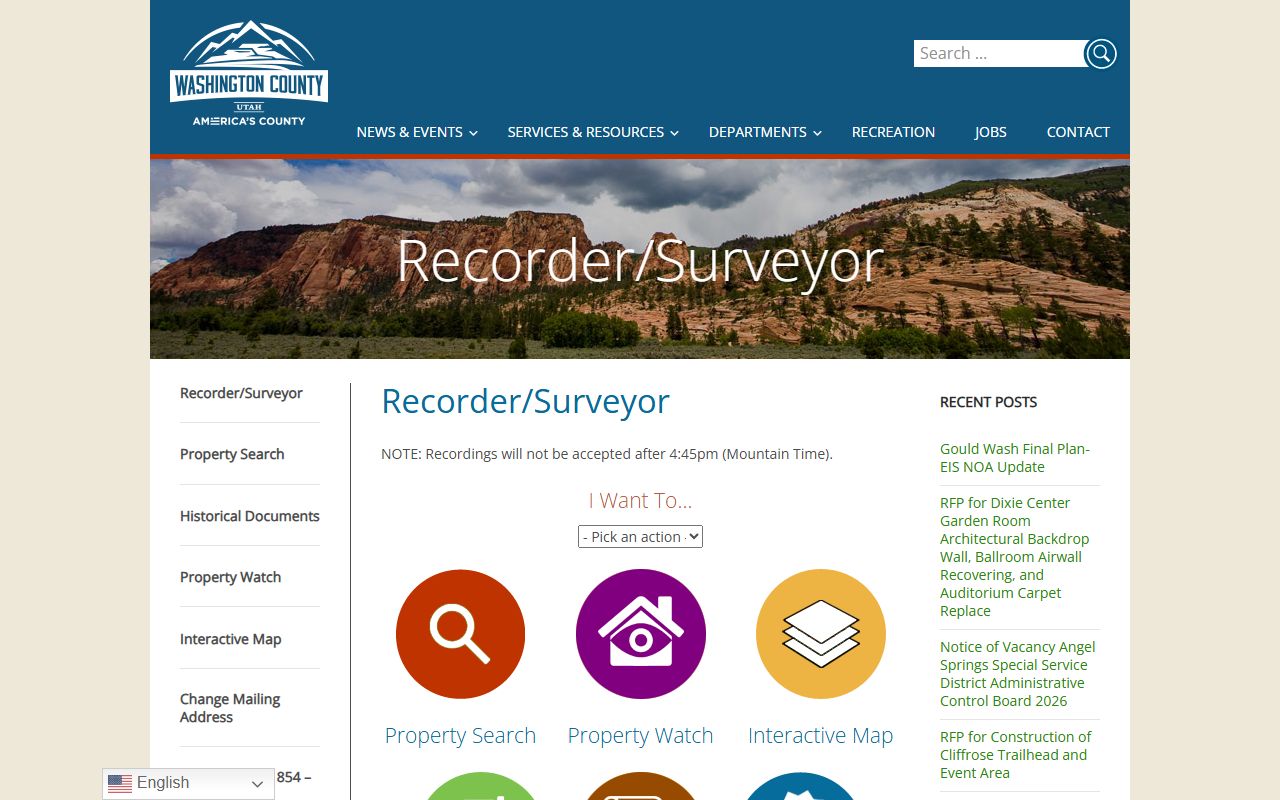
The recorder page connects directly to the account search, document search, and GIS viewer tools that cover St. George parcels.
Online Search Tools for St. George Property Records
Washington County provides several distinct online tools for searching property records. Each one is useful for different tasks, and it helps to know what each does before you start searching.
The Account Search portal at eweb.washco.utah.gov lets you search by account number, owner name, or property address. This is typically the fastest way to find a St. George parcel if you know the address or the current owner's name. Results show parcel details and can link to related recorded documents.
The Document Search at EagleWeb works differently. You search by grantor name, grantee name, or document type. This is the right tool when you want to see all deeds recorded by or to a specific person, or when you want to find all documents of a certain type, like deeds of trust or liens, filed during a certain period. It covers the full range of instrument types recorded with Washington County.
The Washington County Assessor also has a search tool at washco.utah.gov/forms/assessor/search that shows assessed values and property tax information for St. George parcels. Assessed value data is separate from recorded documents, but both are part of a complete property record review. The assessor tool is especially useful when you need to know how a property is classified for tax purposes or want to compare valuations.
For statewide assessed value data, the Utah State Tax Commission maintains a property values portal at propertyvalues.utah.gov. This tool covers all Utah counties, including Washington County, and can be a quick way to pull assessed values without navigating each county system individually.
Property Watch: Protect Your St. George Property
Washington County offers a free Property Watch service that sends alerts when a document is recorded against a property in your name. This is a useful fraud prevention tool. Property fraud, sometimes called deed fraud or title theft, involves someone recording a false deed or other document to claim ownership of a property they do not own. The Property Watch service gives you early notice if something gets recorded against your St. George property.
Sign up at washco.utah.gov Property Watch. The service is free and requires only your name and an email address. You do not need to be the property owner to sign up, though most people enroll their own properties.
The screenshot below shows the Washington County Property Watch signup page, where St. George property owners can register for fraud alert notifications.
The Property Watch signup page is available at Washington County's Property Watch page.
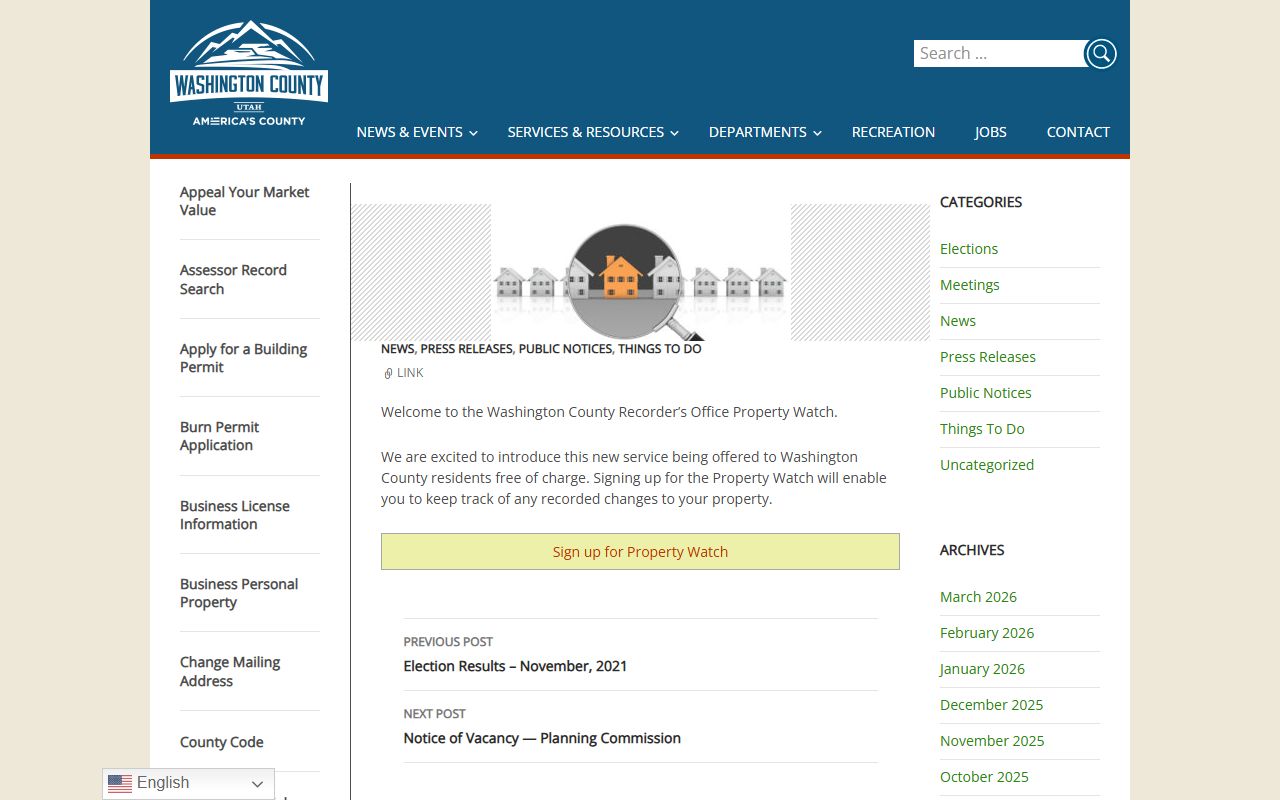
Enrollment is free and takes only a few minutes. St. George property owners with multiple parcels can register each one separately.
St. George Building Department and Permit Records
The Washington County Recorder holds deed and lien records. But for permit history, you go to the city. St. George's Building Department keeps records of all permits issued for construction, additions, and renovations within city limits. If you are buying or researching a St. George property, permit records can tell you a lot. They show what work was done, whether it was permitted, and whether inspections were completed and approved.
The screenshot below is from the St. George Building Department page, where residents and researchers can access permit-related information for properties in the city.
St. George Building Department information is available at sgcity.org/building.
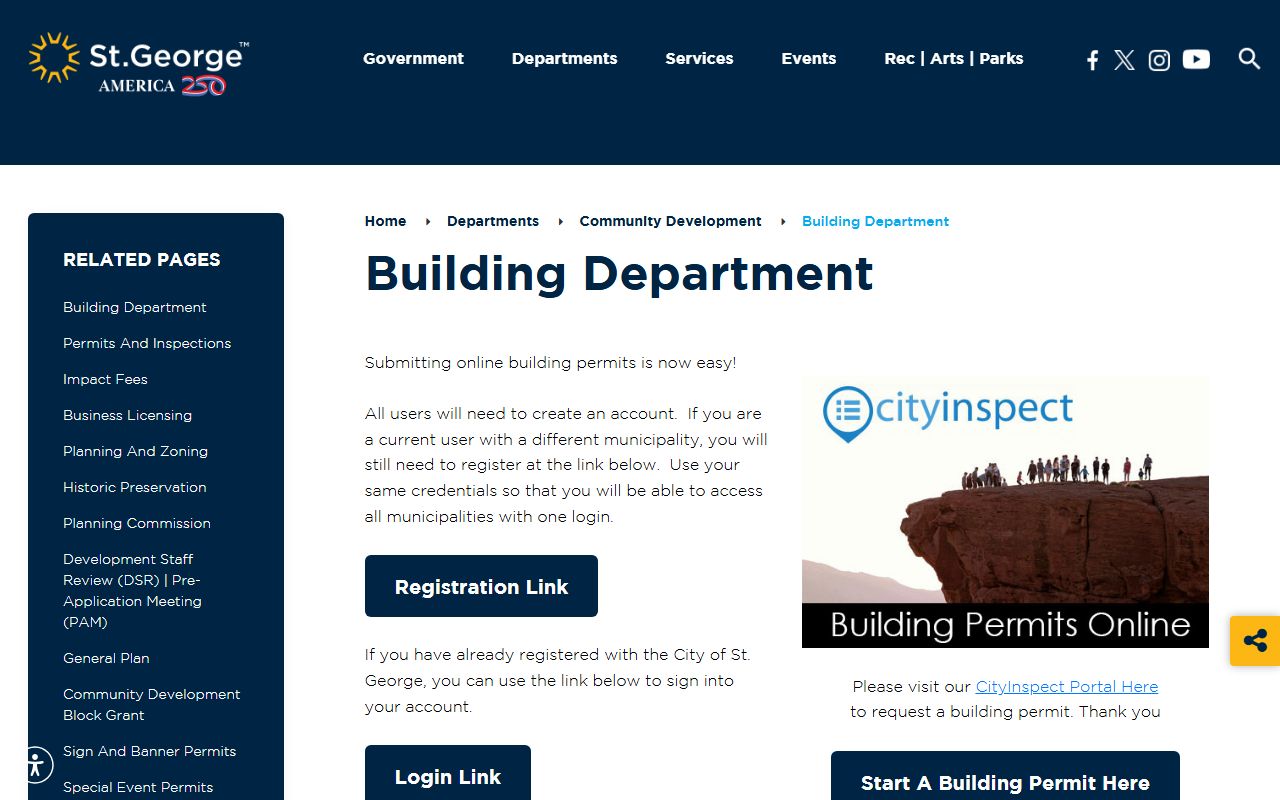
Building permit records at the city level are separate from county recorder documents and should be checked independently during any property research.
Unpermitted work can create problems during a sale or refinance. If a previous owner added a room, finished a basement, or built a garage without pulling permits, that work may not be properly recorded. The St. George Building Department is the right place to check for work done inside city limits. Contact the department directly at sgcity.org/building if you need records going back more than a few years, as some older records may require a formal request.
Planning and Zoning Records in St. George
Zoning and land use information for St. George comes from the city's Planning Division, not the county. The Planning Division maintains records on how properties are zoned, what uses are allowed, and what conditional use permits or variances have been granted. If you want to know whether a St. George parcel can be used for commercial purposes, or whether a variance was approved for a structure setback, the Planning Division has that information.
The screenshot below shows the St. George Planning Division page, which is the city's resource for zoning, land use, and development permit records.
The St. George Planning Division is accessible at sgcity.org/planning.
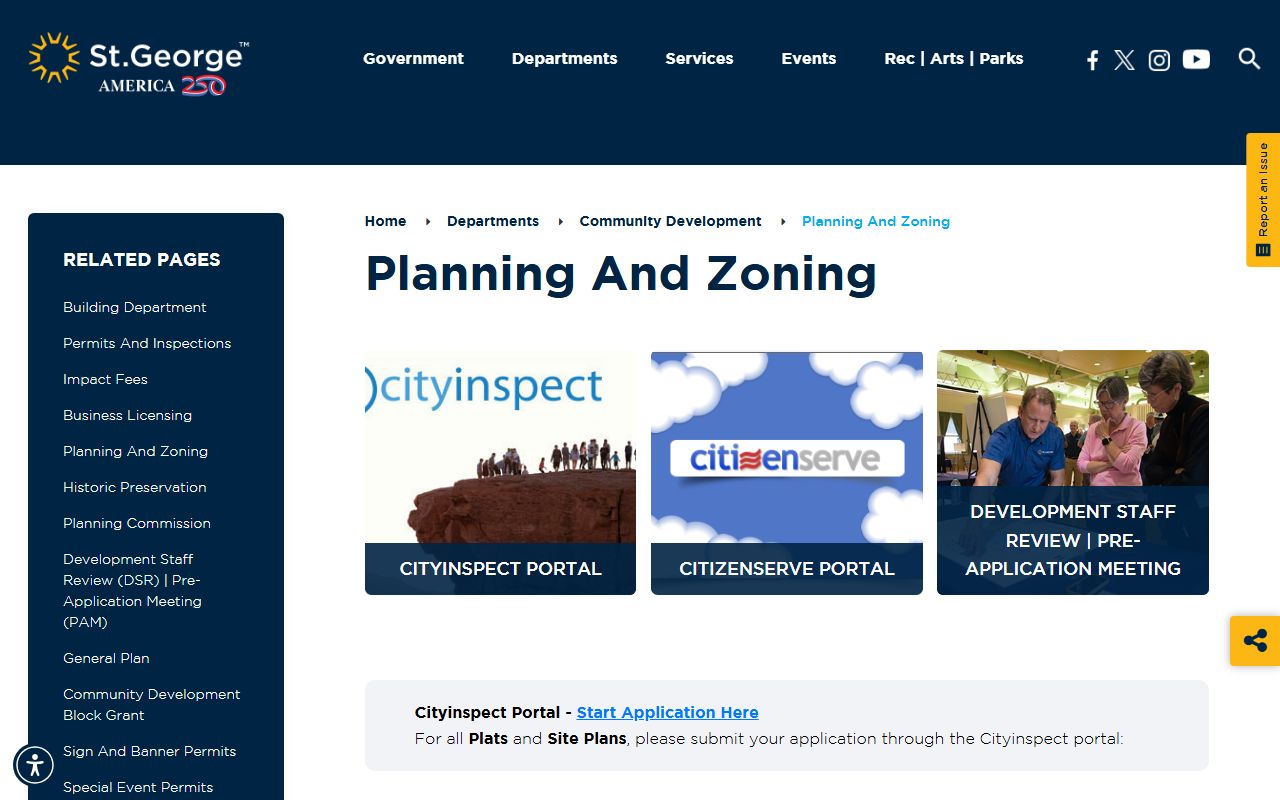
Zoning records at the Planning Division are part of the public record and available to anyone doing research on St. George properties.
The Planning Division also handles subdivision approvals and plat reviews before they go to the county recorder for recording. If a subdivision in St. George was created recently, the planning records may give you context on the development that the recorder documents alone do not provide. Contact the Planning Division through sgcity.org/planning for specific records requests or zoning inquiries on a particular parcel.
St. George City GIS Mapping System
St. George maintains its own city GIS portal that goes beyond what the county GIS viewer provides. The city's system at maps.sgcity.org/sgcitymaps includes detailed property data, zoning overlays, utility lines, aerial photography, and more. This is a powerful tool for anyone doing detailed research on a St. George property because it shows multiple data layers in one place.
The screenshot below is from the St. George City GIS system, which offers parcel-level property data, zoning maps, and aerial imagery for the city.
The St. George City GIS viewer is available at maps.sgcity.org/sgcitymaps.
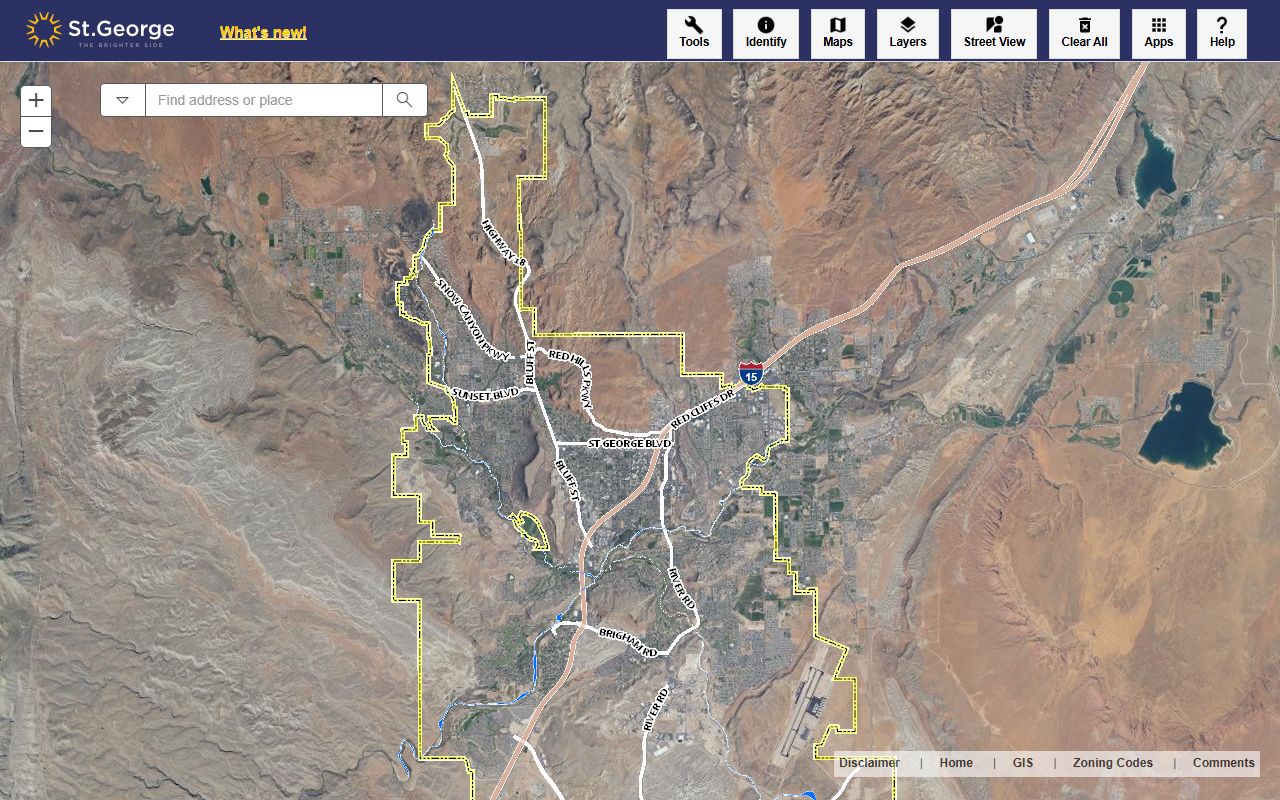
The GIS system allows users to search by address, view parcel boundaries, check zoning, and see aerial photography for any location within St. George.
In addition to the city GIS, the Washington County GIS viewer at geo.washco.utah.gov provides county-level mapping that covers St. George and surrounding areas. The Utah Geographic Information Center at gis.utah.gov also has statewide parcel data layers available for download or viewing. Between the city GIS, county GIS, and state GIS, you have three separate mapping resources that all cover St. George parcels from different angles.
Washington County Map Inventory and Additional Resources
Washington County keeps a map inventory that covers subdivision plats, survey maps, and other recorded map documents. The map inventory is available at washco.utah.gov/map-inventory and can be useful when you need plat maps for a specific St. George subdivision. Plat maps show lot layouts, easements, street dedications, and other features that affect how a parcel can be used.
For historical property records, the Utah State Archives at archives.utah.gov holds county records going back to the territorial era. Washington County has a long recorded history, and some older documents for St. George properties may be in the archives rather than in the county's current digital system. The archives are searchable online, and staff can assist with requests for older records.
The Utah State Archives is a good resource for early Washington County records. Visit archives.utah.gov to search their holdings.
Utah Recording Laws and Public Access
Utah uses a race-notice recording system under Utah Code Title 57. In simple terms, when two buyers claim the same St. George property, the one who recorded first and had no prior notice of the competing claim prevails. This is why recording a deed as soon as possible after closing matters. Delay can create risk, especially in a fast-moving market like St. George.
All documents recorded with the Washington County Recorder are public records under GRAMA, the Government Records Access and Management Act found at Utah Code § 63G-2. Any person can request copies of deeds, liens, mortgages, and other recorded instruments for St. George properties. You do not need to prove ownership or show a reason to access these records. Copy fees vary by document type and length; check with the recorder's office for current rates.
The Utah Legislature's full text of property recording statutes is at le.utah.gov. Statutes governing real property transactions, recording requirements, and liens are found throughout Title 57 of the Utah Code. These statutes apply equally across all Utah counties, including Washington County and all St. George properties.
Washington County Property Records
St. George is in Washington County. Visit the Washington County property records page for full details on the county recorder, all online search tools, fee schedules, and related offices covering the entire county.
Nearby Utah Cities
Washington City is adjacent to St. George and uses the same Washington County Recorder for property records. Cedar City to the north is another nearby city with its own property records page.