
Find Property Records in Logan
Logan property records are kept by the Cache County Recorder, located just a few blocks from Logan City Hall on North Main Street. If you want to search deeds, liens, ownership chains, or any recorded document tied to a Logan address, this is where to start. This page covers every resource available for searching Logan and Cache County property records, including online tools, the county offices, and historical sources.
Logan Quick Facts
Cache County Handles Logan Property Records
Logan is the county seat of Cache County, and all property records for the city are maintained by the Cache County Recorder. Under Utah Code Title 57, county recorders are responsible for recording, indexing, and providing access to real property instruments. Logan City does not hold deed records or mortgage documents. Every title instrument for a Logan property, going back to territorial times, is held at the Cache County Recorder's office.
The Cache County Recorder is located at 179 North Main Street, Logan, UT 84321. The phone number is (435) 716-7150. Because Logan is the county seat, the recorder's office is convenient for most Logan residents. The office records deeds, trust deeds, liens, plat maps, easements, notices of default, and other instruments affecting real property in Cache County. Any document that touches title to a Logan parcel goes through this office.
| Office | Cache County Recorder |
|---|---|
| Address | 179 North Main Street Logan, UT 84321 |
| Phone | (435) 716-7150 |
| Website | cachecounty.org/recorder |
Recording gives constructive notice under Utah Code § 57-3-101. Once a deed or lien is filed with the Cache County Recorder, any future buyer or lender is presumed to know it exists. This rule protects Logan property owners who record their instruments promptly. A document left unrecorded has no effect against a later purchaser who paid value without actual notice of the prior claim.
Online Tools for Logan Property Records
Cache County offers one of the better online property search tools in Utah through its CORE Online Records Express portal. You can access it at core.cachecounty.org. The CORE system lets you search recorded documents by owner name, parcel number, document type, or recording date. Images of recorded instruments are available for viewing and downloading. This is the most direct way to search Logan property records without visiting the office.
The Cache County CORE system gives online access to Logan deed and lien records. The screenshot below shows the CORE Online Records Express interface used for property document searches.
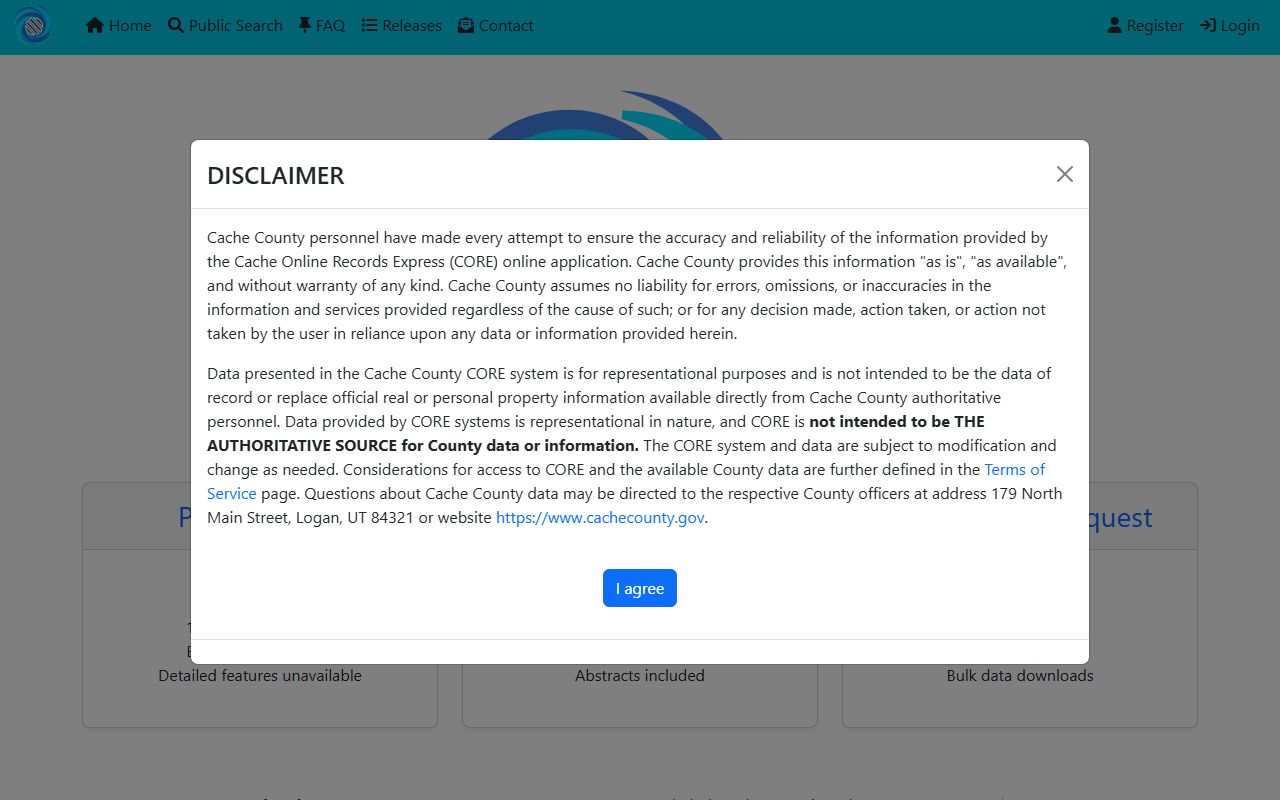
The CORE system covers a wide range of recorded instruments. When you find a document, you can see the grantor and grantee names, recording date, document type, and the full image of the filed paper. Title researchers and attorneys use CORE regularly for Logan property work. It is available around the clock, and most searches do not require an account to view basic results.
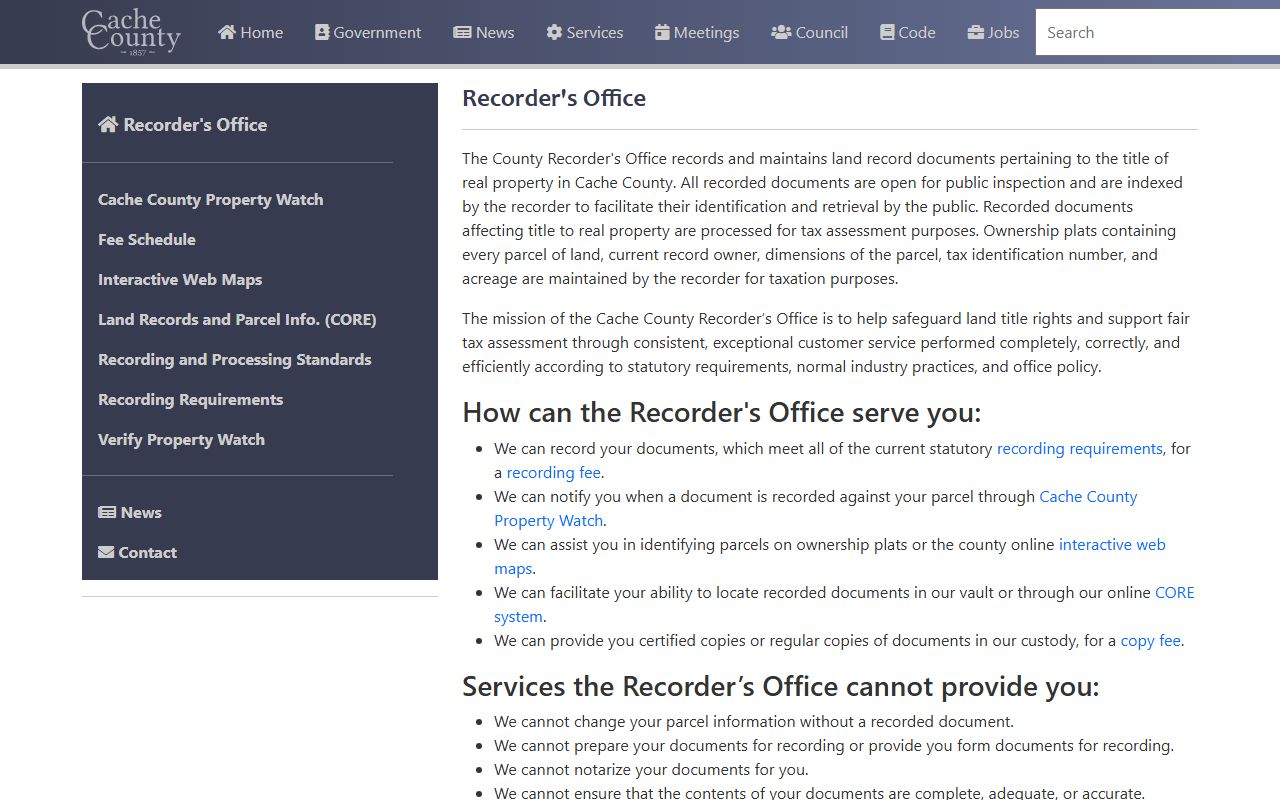
The Cache County Recorder office portal at cachecounty.org/recorder also links to indexes and provides guidance on making requests. The screenshot below shows the main recorder office page, which is the starting point for many Logan property searches.
For property valuation and tax information on Logan parcels, the Cache County Assessor at cachecounty.org/assessor maintains ownership records, assessed values, and parcel maps. The assessor can be reached at (435) 755-1530. Assessor data is separate from recorder data but often used together when researching a property. The assessor shows who owns a parcel today; the recorder shows the full history of how title moved over time.
Note: Recorder documents and assessor data may not always match exactly in timing. Newly recorded transfers can take a short period before assessor records reflect the change.
Property Watch Service for Logan Homeowners
Cache County offers a free Property Watch alert service for Logan property owners. When you sign up, you provide your parcel number and an email address. If any document gets recorded against your property at the Cache County Recorder, you receive an email notification right away. This service is designed to catch deed fraud and unauthorized recordings before they cause lasting harm.
Enroll at cachecounty.org/recorder/propertywatch. There is no charge. The alert does not block recordings, but knowing quickly that something was filed gives you time to contact the recorder and take legal steps if needed. Logan homeowners who own property free and clear are especially good candidates for this service since vacant title is a known fraud target.
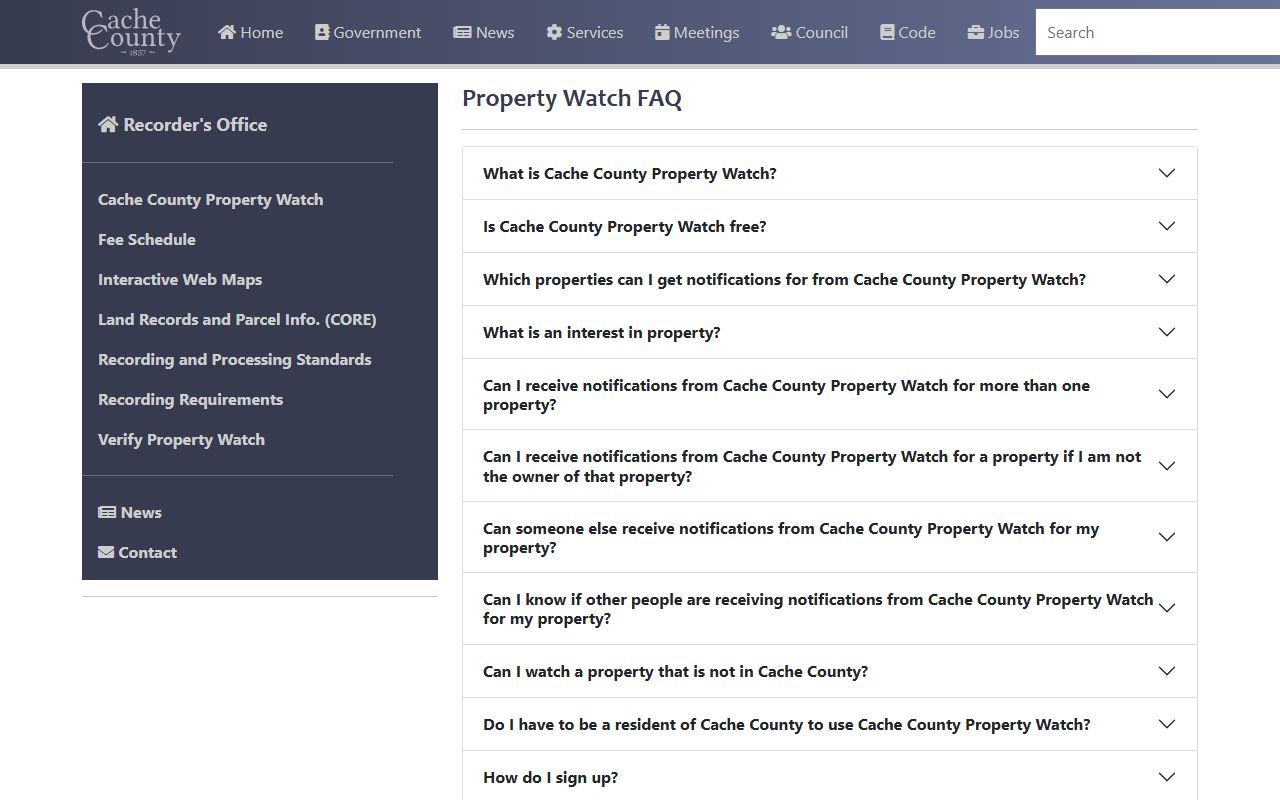
The Cache County Property Watch page below shows the alert system that Logan property owners can use to monitor their title.
Property fraud is a real concern in Utah. Signing up for Property Watch costs nothing and takes only a few minutes. For Logan property owners with multiple parcels, you can register each parcel number separately to get alerts on all of them.
Historical Logan Property Records
Logan has deep roots in Cache County history. The earliest deed books covering Logan area properties date from territorial times in the 1860s and 1870s. The Cache County Recorder holds historical indexes and deed books going back to the county's formation. Some of these older records have been microfilmed or digitized, though not all early volumes are searchable online.
The Utah Division of Archives at archives.utah.gov holds early Cache County land records from the territorial period. Deed books, survey records, and land entry papers that predate statehood in 1896 may be available through the state archives. If you are tracing a chain of title for an old Logan property, the archives and the county recorder together can often fill in the full picture.
Utah State University, located in Logan, also maintains research collections that may include historical maps and property-related materials for Cache Valley. For deep historical research on Logan land use, the university library's special collections can be a useful supplement to official government records.
The Utah Geographic Information Council at gis.utah.gov provides parcel boundary data and GIS maps for Cache County including Logan. Historical aerial imagery and survey data available through UGIC can help confirm lot boundaries and track how parcels have been split or combined over the years.
Recording Laws and Access Rights for Logan Records
Utah's Government Records Access and Management Act, known as GRAMA, is codified at Utah Code § 63G-2. Under GRAMA, most property records held by the Cache County Recorder are public documents. Any person can request access to view or copy recorded instruments for Logan properties. The government cannot restrict access without a specific legal basis, and most title documents have no such restriction.
You do not have to be the property owner or a party to any transaction to look up Logan property records. Title companies, lawyers, researchers, buyers, neighbors, and the general public all have the same right to search the recorder's index and view recorded documents. Fees may apply for printed copies or certified documents. Call the Cache County Recorder at (435) 716-7150 to ask about current copy fees before your visit.
Utah Code § 57-3-102 states that a recorded instrument gives notice from the time of its recording. This means the public record at the Cache County Recorder is the controlling source of truth for property ownership in Logan. A private agreement that was never recorded has no legal effect against later buyers or lenders who had no notice of it. Recording is the step that converts a private deal into a public right.
Cache County Property Records
Logan is the county seat of Cache County. All property deeds and recorded documents for Logan are maintained by the Cache County Recorder. For a complete guide to county resources, online tools, and related property records, visit the Cache County property records page.
Nearby Utah Cities
Other cities in northern Utah also route property records through their respective county recorders. Select a nearby city for specific resources in that area.